



Conselhos de saúde com o coração
 Saúde no Sudeste
fevereiro é o Mês Americano do Coração - a altura perfeita para mostrar algum amor ao seu coração. A cardiologista da Southcoast Health, Carolyn Davidson, MD, partilha alguns conselhos saudáveis para proteger e fortalecer o músculo mais importante do seu corpo.
Mover-se com o coração
O exercício físico é uma das ferramentas mais poderosas para manter um coração saudável. Fortalece o músculo cardíaco, melhora a circulação e ajuda a gerir factores de risco como a tensão arterial elevada, o colesterol e o peso.
E a melhor parte? Não precisa de ser membro de um ginásio ou de equipamento sofisticado - apenas um compromisso de se mexer mais todos os dias.
Os melhores exercícios para o seu coração
- Uma caminhada rápida de 30 minutos cinco dias por semana pode reduzir para metade o risco de doença cardíaca!
- Andar de bicicleta, seja na estrada ou numa bicicleta ergométrica, aumenta a resistência e faz o seu coração acelerar de uma forma positiva.
- A natação é um exercício para todo o corpo que é fácil para as articulações mas difícil para as doenças cardíacas.
- O ioga e o treino de resistência mantêm o coração e os músculos fortes e reduzem o stress.
- Ponha a sua lista de reprodução favorita a tocar e mexa-se - é cardio disfarçado de diversão!
Começar a trabalhar
- Começou a fazer exercício? Comece com sessões de 10 minutos e vá aumentando.
- Pouco tempo? Divida-o em três caminhadas de 10 minutos por dia.
- Aborrece-se facilmente? Experimente um novo exercício todas as semanas para manter as coisas interessantes!
Coma para o seu coração
Não se coloca combustível de má qualidade num carro de corrida - então porquê fazê-lo ao seu corpo? Os alimentos certos podem baixar o colesterol, reduzir a inflamação e manter o seu coração a funcionar a toda a velocidade. Aqui estão alguns dos melhores alimentos saudáveis para o coração, com dicas simples para os utilizar no dia a dia.
Frutas e legumes
Estes estão repletos de fibras, antioxidantes e potássio, que ajudam a baixar a tensão arterial e a inflamação.
- Folhas verdes: espinafres, couves, acelgas
- Bagas: mirtilos, morangos, framboesas
- Vegetais crucíferos: brócolos, couves-de-bruxelas, couve-flor
- Produtos coloridos: tomates, cenouras, pimentos, batatas doces
Dica: Tente que metade do seu prato seja composto por frutas e legumes.
Gorduras saudáveis (Ómega 3 e gorduras insaturadas)
Estes ajudam a melhorar o colesterol e a reduzir a inflamação.
- Peixes gordos: salmão, sardinha, cavala, truta
- Frutos secos: amêndoas, nozes, pistácios
- Sementes: chia, linhaça, abóbora, girassol
- Óleos vegetais: azeite, óleo de abacate, óleo de canola
- Abacates
Dica: Troque a manteiga ou os molhos cremosos por azeite ou abacate.
Cereais integrais
Ajudam a reduzir o colesterol LDL ("mau") e a melhorar o açúcar no sangue.
- Aveia e papas de aveia
- Pão e massas de cereais integrais
- Arroz integral, quinoa, cevada
- Farro, bulgar
Dica: Procure "100% whole grain" ou "whole wheat" como primeiro ingrediente.
Proteínas vegetais
Ótimo para a saúde do coração e para o controlo do colesterol.
- Feijão: preto, rim, grão-de-bico, lentilhas
- Tofu e tempeh
- Edamame (feijão de soja)
Dica: Experimente fazer uma refeição sem carne uma ou duas vezes por semana.
Proteínas magras e com baixo teor de gordura
- Aves sem pele
- Peixe e marisco
- Iogurte e leite magros
- Ovos (especialmente claras de ovo ou ovos inteiros com moderação)
Dica: Limite as carnes processadas - como o bacon, a salsicha e a charcutaria - que são ricas em sódio e gordura saturada.
Conclusão
Manter o seu coração saudável não tem de ser complicado - mesmo os passos mais pequenos podem fazer uma grande diferença. Mantenha o seu prato colorido com deliciosas frutas, legumes e proteínas saudáveis. Limite os açúcares adicionados e os alimentos processados e mantenha-se fiel aos alimentos naturais e integrais sempre que possível. Mantenha o seu corpo forte, integrando o exercício físico na sua rotina diária. Não precisa de ser um chefe de cozinha ou um atleta de elite - só precisa de começar.
Desejo-vos boa saúde e um coração forte,
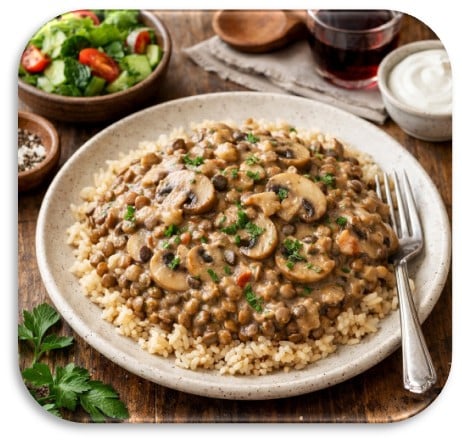
Experimente uma das receitas favoritas do Dr. Davidson para amar o coração: Estrogonofe vegetariano de lentilhas e cogumelos
- Produtos
- 1 lb de cogumelos baby bella (ou cogumelos brancos), cortados em fatias finas
- 1 cebola média-grande, cortada em cubos
- 1 dente de alho
- Ervas aromáticas frescas (à escolha)
- Despensa
- 1 chávena de lentilhas secas
- 3 chávenas de água
- 4 colheres de sopa de azeite (total)
- 1 colher de sopa de farinha (ou farinha sem glúten 1:1)
- 1 colher de sopa de pasta de tomate
- ½ colher de chá de mostarda Dijon
- ¾ chávena de caldo de legumes sem sal (também pode utilizar caldo de carne ou de galinha, se preferir)
- Vinho tinto (alguns salpicos no total)
- Sal
- Pimenta preta
- Lacticínios
- 1 colher de sopa de manteiga sem sal
- ⅓ chávena de natas azedas
- Facultativo para servir
- Couve-flor picada
- Massa de cereais integrais
- Arroz integral
- Quinoa
- Trigo bulgur
- Salada ou legumes adicionais
Instruções
- Cozinhar as lentilhas
- Misture as lentilhas, a água, o alho, as ervas aromáticas, o sal e a pimenta numa panela
- Cozinhe em lume brando durante 15-20 minutos até ficarem tenras, mas não moles; escorra se necessário e mantenha quente
- Dourar os cogumelos
- Aqueça 2 colheres de sopa de azeite numa frigideira antiaderente grande em lume médio-alto
- Adicione os cogumelos numa única camada; não os encha demasiado
- Quando começarem a alourar, tempere com sal e pimenta
- Quando estiver bem dourado, adicione um pouco de vinho tinto e deixe cozinhar durante 30 segundos
- Transferir os cogumelos para um prato
- Preparar o molho
- Na mesma frigideira, aqueça 2 colheres de sopa de azeite
- Adicione a cebola cortada em cubos e salteie cerca de 5 minutos até ficar macia e dourada
- Adicionar manteiga e um pouco de azeite
- Juntar a farinha e cozinhar durante 1 minuto (não deixar queimar)
- Adicione a mostarda Dijon e a pasta de tomate; cozinhe durante 30 segundos
- Deite o caldo e mexa até ficar homogéneo
- Terminar o estrogonofe
- Adicione as lentilhas cozidas e misture bem; reduza o lume para baixo e cozinhe durante 1 minuto
- Junte novamente os cogumelos com mais um pouco de vinho; deixe cozer em lume brando durante 2 minutos
- Junte as natas azedas até ficarem cremosas e bem aquecidas; prove e ajuste os temperos, se necessário
- Servir
- Colher sobre macarrão, arroz, quinoa, bulgur ou couve-flor em puré
- Adicione uma salada fresca ou legumes cozinhados a vapor
- Suplementos opcionais
- Salsa fresca ou endro
- Espinafres adicionados no final
- Paprika fumada ou tomilho para uma maior profundidade
