



Tecnología de cirugía asistida por robot
El futuro de la cirugía está en Southcoast Health
La cirugía asistida por robot permite a los cirujanos realizar muchos tipos diferentes de intervenciones complejas con más precisión, flexibilidad y control de lo que normalmente es posible con las técnicas quirúrgicas convencionales.
Para los pacientes, la cirugía robótica puede ofrecer varias ventajas potenciales frente a la cirugía abierta convencional, entre ellas:
- Menos pérdidas de sangre
- Menor riesgo de infección
- Menos cicatrices
- Estancias hospitalarias más cortas
- Menor tiempo de recuperación
Reconocimiento a la excelencia clínica en cirugía robótica
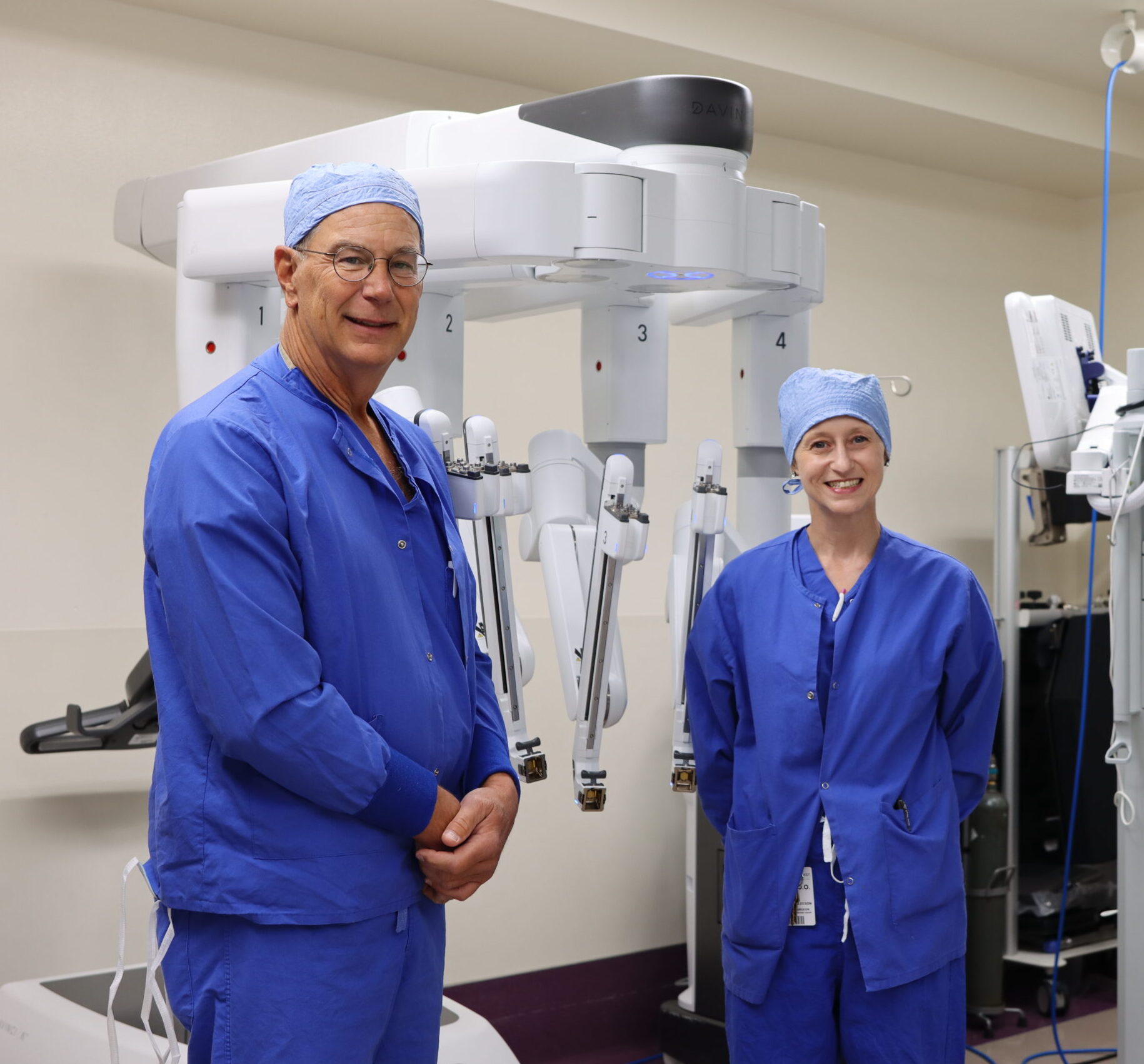
Cómo funciona la cirugía asistida por robot
Sistema quirúrgico da Vinci
Mayor precisión con incisiones más pequeñas
Con el Sistema quirúrgico da VinciEl cirujano se sienta en una consola de control en el mismo quirófano que el paciente. La consola traduce en tiempo real los movimientos de la mano del cirujano en la consola, doblando y girando los instrumentos mientras realiza el procedimiento.
Mako™ Tecnología asistida por brazo robótico
Una nueva solución para el dolor articular
El sistema Mako guía al cirujano dentro de una zona predefinida y le ayuda a evitar que se salga de los límites previstos. El sistema Mako no realiza realmente la cirugía, simplemente ayuda a los cirujanos a realizar el procedimiento con mayor precisión y con un método mínimamente invasivo.
Sistema quirúrgico 7D Flash
Una visión clara de la cirugía de la espalda
Tecnología quirúrgica 7D para intervenciones de columna guía a los cirujanos con una imagen 3D muy detallada tomada en sólo cuatro segundos. De forma similar a lo que el GPS ha hecho por la navegación geográfica, 7D es como un sistema GPS para la cirugía de la espalda. El sistema permite a los cirujanos realizar intervenciones rápidas, eficaces y sin radiación.
Sistema endoluminal robotizado Ion
Un enfoque mínimamente invasivo de la biopsia pulmonar y el tratamiento del cáncer
Durante una broncoscopia con el sistema quirúrgico Ion, el cirujano utiliza el controlador para navegar hasta el objetivo siguiendo una trayectoria planificada. El catéter puede articularse 180° en cualquier dirección para atravesar vías aéreas pequeñas y difíciles de navegar, así como curvas cerradas para llegar a los 18 segmentos del pulmón.
