



Understanding Cold vs Flu vs COVID-19: Your Guide to Care & Treatment
 Southcoast Health
Respiratory illnesses peak in fall and winter. Lately, communities in our region have been seeing increased cases of colds, flu and COVID-19 at the same time – and hospitals, Emergency Departments and urgent care centers are busier than ever.
It can be hard to tell these illnesses apart because they share many symptoms. This month, Primary Care Provider and Executive Chief of Primary Care John Podkowa, DO, offers guidance on recognizing the differences, so you can take the right steps for treatment and know where to go for care.
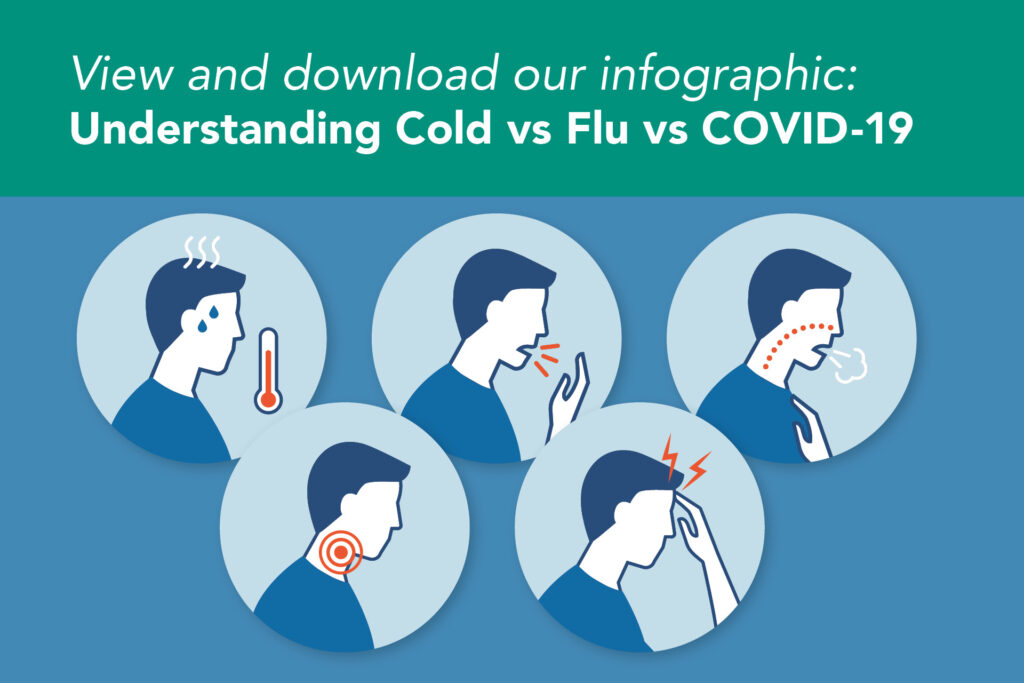
Understanding Cold vs Flu vs Covid-19
For information at a glance, download our quick-reference guide.
Why Are Respiratory Illnesses Rising?
This season, doctors and health experts are reporting more cases of colds, flu and COVID-19 at the same time – often called a “tripledemic.” Reasons include:
- More time spent indoors in colder weather
- Increased travel and social gatherings
- Immunity from past infections and vaccines diminishes over time
Quick Facts:
- Colds are usually milder and mostly involve runny nose and sore throat.
- Flu tends to hit fast and hard with fever, aches, cough and fatigue.
- COVID-19 can look like flu or cold, but loss of taste/smell and breathing problems are more common.
Testing is Important: Don’t assume it’s “just a cold” – understanding the difference can help you identify illness sooner, helping you get the right care at the right time and potentially minimize the duration and severity of illness.
Know Where – and When – to Go for Care
At Home / Primary Care Provider (PCP)
- Mild symptoms
- Fever without trouble breathing
- You feel mostly able to manage
Be sure to:
- Rest & stay hydrated
- Take fever reducers/pain relievers as advised
- Keep distance from others
- Call your PCP if you’re unsure
Your PCP knows your health history and can advise you about testing, antivirals (for flu/COVID-19) and follow-up.
Urgent Care
Urgent care centers typically have shorter wait times than Emergency Departments. Southcoast Health Urgent Care offers online booking so you can reserve your spot and minimize waiting.
Go here if you have:
- Illness that won’t wait for a scheduled appointment
- Moderate symptoms that are not life-threatening
- Need for rapid testing or same-day evaluation
- Symptoms like persistent fever, dehydration or cough that worsens
Urgent care centers can provide rapid testing and basic treatment.
Emergency Department (ED)
Seek emergency care immediately if you have:
- Trouble breathing, shortness of breath
- Chest pain or pressure
- Confusion, inability to wake up
- Bluish lips / face
- Severe dehydration or very high fever that does not respond to medication
- Symptoms that suddenly worsen
These may signal serious complications like pneumonia or low oxygen levels.
Testing Guidance
- If you have symptoms, consider self-testing for flu and COVID-19.
- Many clinics, pharmacies and urgent care sites offer rapid tests.
- Early detection can help guide treatment decisions (e.g., antivirals).
Prevention Tips for All Seasons
- Stay up to date with vaccines (annual flu vaccine; COVID vaccines / boosters)
- Wash hands often
- Wear a mask in crowded settings
- Stay home when sick
- Cover coughs and sneezes
The Bottom Line
Cases of respiratory illnesses like colds, flu and COVID-19 are rising in our community, and their symptoms often overlap, making it hard to tell them apart. Colds are usually mild, the flu tends to hit hard and fast with fever and body aches, and COVID-19 can range from mild to severe and may include breathing problems or loss of taste or smell. If symptoms are mild, rest at home and contact your primary care provider for guidance or testing. Use urgent care for worsening or same-day concerns and go to the Emergency Department or call 911 immediately for trouble breathing, chest pain, confusion or other severe symptoms. Testing, early care and staying home when sick help protect you and others.
Wishing you good health,
John Podkowa Jr., DO
Executive Chief of Primary Care
